
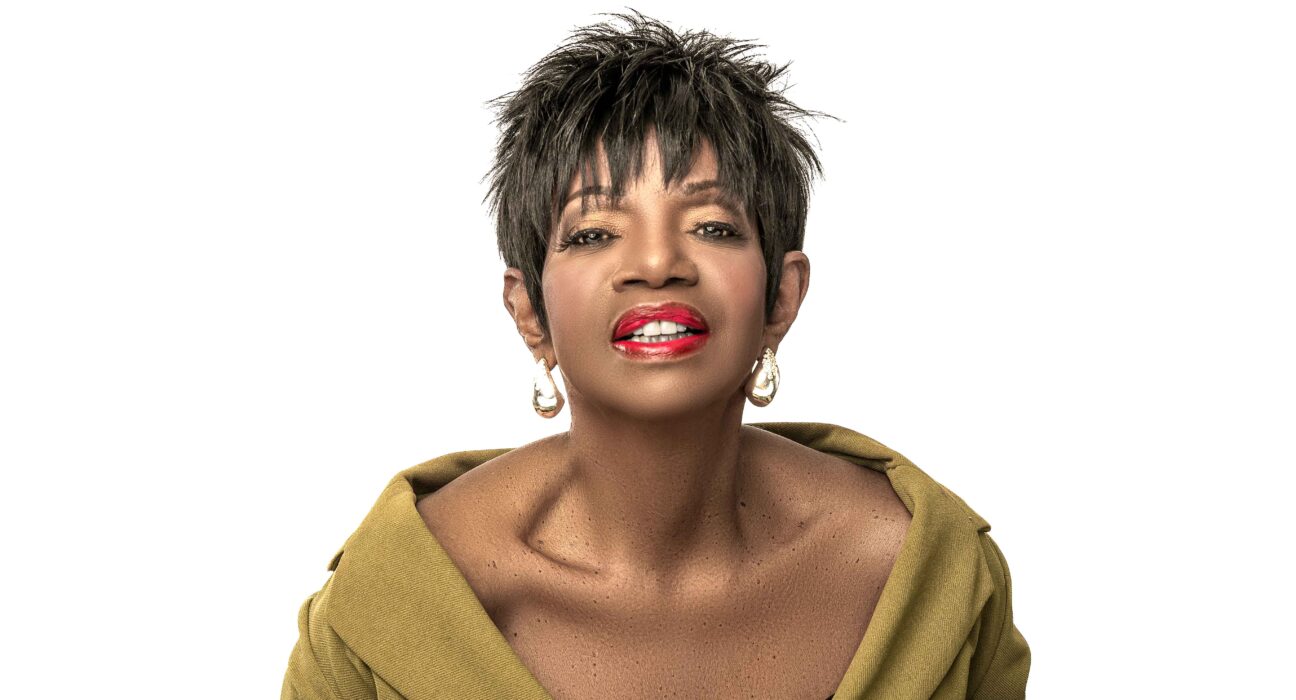
Tony Award® winner and three-time Grammy nominee Melba Moore returns to the stage with the grace, power, and presence that have defined her extraordinary career for more than five decades. This July, she brings her brand-new one-woman show, Melba Moore: From Broadway, With Love” to the legendary stage at 54 Below (254 W. 54th St., NYC) for two special performances: Wednesday, July 9th and Thursday, July 10th, 2025.
A true trailblazer, Moore’s dazzling legacy includes iconic Broadway performances, a successful recording career, and a pioneering role in breaking racial barriers on stage and screen. In this deeply personal and musically rich performance, she pays tribute to the women who paved the way before her—from Lena Horne and Diahann Carroll to Barbra Streisand and Liza Minnelli—while also celebrating her own historic path. Backed by a live trio and a stunning visual photo montage, Moore invites audiences on an unforgettable journey through music, memory, and meaning.
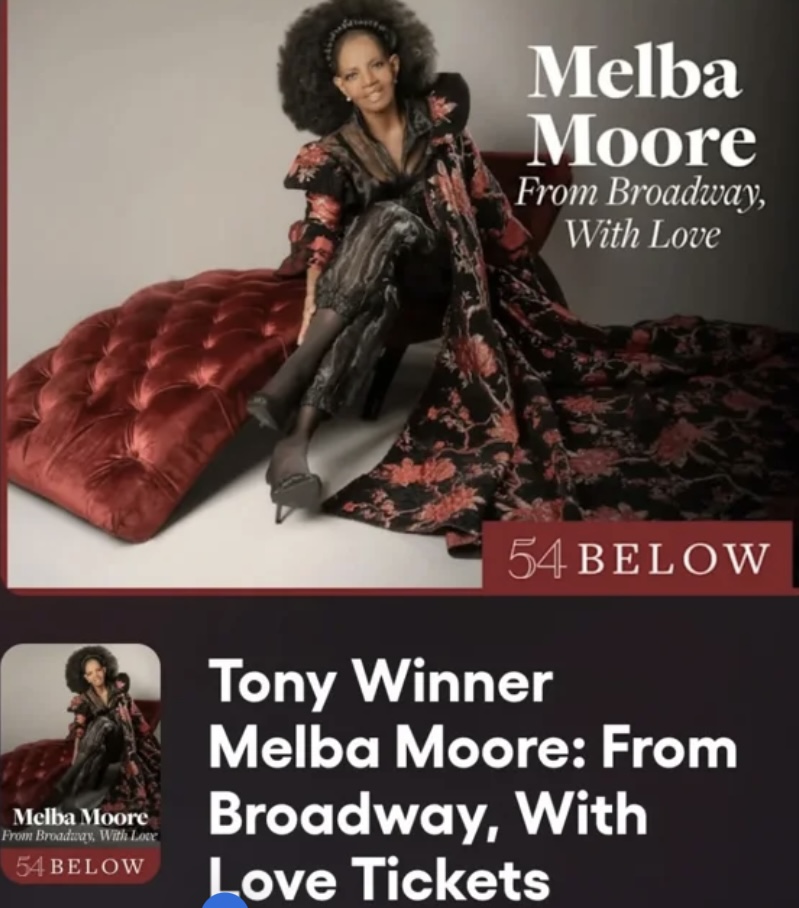
Raised in a household of professional musicians in New York City, Moore’s early career saw her singing backup for icons like Frank Sinatra and Aretha Franklin before making her Broadway debut in Hair, where she succeeded Diane Keaton. Her unforgettable turn as Lutiebelle in Purlie earned her the 1970 Tony Award for Best Featured Actress in a Musical, and she went on to conquer both the stage and the Billboard charts.
Now, with From Broadway, With Love, Melba Moore opens her heart and revisits the music, moments, and milestones that have shaped her—and generations of performers after her. It’s not just a show—it’s a celebration of legacy, resilience, and the magic of the theater.
getoYour show is called “From Broadway With Love,” and it is kind of described as a love letter to iconic music of certain women. Inspired by Lena Horne and Barbra Streisand. What inspired you to pay tribute to these legends?
I am still a fan of both of them. I am still stunned at the fact that I met them. The show is a tribute to the two of them, then the rest of the show is featuring my music. I thought those two were people that audiences would adore, as well as hearing a couple of their songs. But the show is not for me. I thought, I’m going to look really good in their eyes if I feature Barbra Streisand and do one of her songs like Don’t Rain on My Parade. I’m sure people are going to be reminded of the beauty and the strength of Ms. Lena Horne, and they are going to see me a little bit through her if I do something of hers. Some kind of kissing up to the audience, because I know they love those two.
Well, that is very honest of you. But you know what—you are also honoring your own legacy in a way. How did you put that balance together? Your songs are amazing. Their songs are amazing.
I do this all the time. I put it into a script in some kind of order and tell the story. Many of the songs I sing all the time depending on the audience. They are just great songs. They are timeless. Regardless of what the audience’s age is or cultural background, it works. It was very easy to put them together. They don’t have to be alike or similar or any particular genre, because we are American—we are used to diversity. So that part was easy. The difficult part was that I’m not a scriptwriter. I didn’t have the time or the budget to have someone come in and write it. So it had to be my story. And how it fits into my life. So for a moment, I am a writer.
As someone that goes to shows very often, and sees a lot of very cool people, I think that when you tell your own story, it comes out better.
It just has to be authentic, I think.
And there is nothing more authentic than an artist talking about their story rather than someone just writing it for them. How do you select the songs for the show? You have done so many. How do you narrow down the songs that you perform?
That is kind of a chore sometimes. In very diversified types of audiences—and quite often, you can’t mix them. You have to be very sensitive and try to do a little bit of research as to what the audience is going to be made up of. Because the show is for them. It is not for you. For example, if I do a venue that is for dance people, they are not going to want to hear about Barbra Streisand.
Your songs are all kinds of different genres.
It takes a lot of consideration. And I have made some mistakes. But over time, you kind of understand what works and where. You find out what works over time.
A venue like 54 Below—how does it help you connect more intimately with your audience?
It doesn’t, except with the theater aspect I do. Because with another audience I would want to go just as deeply and just as personally. But in that genre, or whatever situation we are in, I always want to be personal and connecting.
You started singing backup for Sinatra and Aretha Franklin and people like that. How does that translate into how you perform today?
You get to see firsthand, like a fly on the wall, these people do their art—their work. Especially when recording. We don’t even see each other. We are not even in the same studio at the same time. But you get a chance to observe them and learn some things from them. Sometimes, when being in the company of great artists like that, I don’t even know if you could articulate how you learn from them. You see in them their aura and their vibe. Their charisma. If you’re going to be a performer, it just rubs off on you. I don’t really know how to explain it.
You have had your famous time on Broadway, which was just amazing. You have done all of these productions. Do you revisit those in your show?
Absolutely. Yes. That’s the point of doing them. You are able to recreate the mood and the situation you’re coming from.
Broadway has evolved, I mean in so many ways through the years. How has your relationship with the stage changed over the years? And what keeps driving you back?
Because it keeps evolving. I remember when I did Purlie, down the street from me was Bette Midler and Fiddler on the Roof. No, I think that was Hair. When I was doing Hair. That show was funny. The environment of Broadway doing Hairand how much it had changed by the time I did Purlie. Down the street was Hello, Dolly! not being played by Barbra Streisand, but by Pearl Bailey. That is an example. Hello, Dolly! was down the street. Pearl Bailey was the star. And Cab Calloway was her leading man. That is like taking a rap artist today and putting him in the male lead. That is how much it had evolved in that amount of time. And of course, Purlie—if you really think about it—is a gospel play. It opens up with a huge gospel song. It was an all-Black show. That was an evolution right there. I don’t think there was a show like that before Purlie. Not that type of music. Sammy Davis might have been on Broadway before that because he’s just an incredible artist. But he’s not a gospel artist. He’s so dark you can’t help but see he’s Black. But you can see how Broadway has evolved. Of course, now we have the biography of Michael Jackson, Tina Turner—that would never have happened back in the day. Of course, the type of music that it brings along with it has a technology that it brings along with it. Those are small examples of how it continues to evolve.
You have broken a million barriers throughout your career, and you can be very proud of that. How do you hope younger generations, especially Black women in theater, receive your show?
I hope they continue to call me Auntie Melba.
I love it. That’s a great answer.
I hope they see the art of what I’ve done. And that they are doing their portion or whatever their talent is because of what I was inspired to do. Not that they try to do what I did, but to continue to develop their own platform. We have many more young producers now that are creating their own projects.
Is there a particular message, emotional or any kind of message that you want to leave along with this show? What are you hoping people walk away with?
I’m going to answer this question with: Was it a party yet? Did we enjoy it? Because I’m telling you my story, but I hope that my story is a joy, for one. I had a healthy, good life that I was able to share. Whatever your work is or your talent is—are you having a party yet?
With a Tony and a million Grammy nominations that span genres and genres, how do you define your artistry today?
How do I define it? I always look for other people to define it.
Is there anything that I didn’t ask you that you want to talk about?
No, I want to talk about what you think your readers are going to be interested in.


Leave feedback about this
You must be logged in to post a comment.